
In an increasingly interconnected world, international education has become one of the most powerful pathways for young people seeking quality learning, global exposure, and accelerated career growth. As we move deeper into 2026, study abroad trends 2026 show that the number of students leaving their home countries for education continues to grow — reshaping aspirations, economies, and workforce landscapes across continents.
According to projections and trends collected from global mobility reports, international student numbers are expected to be around 7.8 to 8 million worldwide in 2026. This reflects a year‑on‑year growth of roughly 10–12% as mobility rebounds and students become more strategic about where they choose to study abroad.
In this blog, we explore who these students are, where they come from, where they go, and why studying abroad continues to be such a compelling choice — with special focus on how Bangladeshi students fit into this broader global story.
Table of Contents
How Many Students Are Going Abroad in 2026?
International education is undergoing a steady resurgence. Study abroad trends 2026 indicate that the number of students pursuing education overseas continues to rise globally. Prior data from 2025 already showed that over 7 million+ students left their home countries to pursue education abroad, marking one of the highest figures in recent history. This includes students of all ages — from undergraduate seekers to postgraduate researchers and professional trainees.
The ongoing rise in these numbers reflects greater recognition of the long‑term value of international qualifications and the increasing importance countries place on global talent exchanges.
Top Host Countries in 2026
While student mobility continues to expand around the world, certain countries remain consistent magnets for international learners. Study abroad trends 2026 show that these destinations remain attractive due to strong academic reputations, economic opportunities, flexibility, and post-study work possibilities.
Here are the leading host countries:
- United States (USA) – Traditionally the largest destination for international students, with over 1.1 million students studying there in recent years.
- Canada – Close behind with approximately 1 million international learners engaging in higher study opportunities.
- United Kingdom (UK) – Hosting around 750,000 international students, the UK remains one of the most popular locations due to its world‑class institutions and relatively straightforward post‑study work options for graduates.
- Australia – With around 700,000 students, Australia continues to be a key destination, offering a safe environment and quality education.
- Germany – Enrolling around 400,000 international students, Germany attracts learners due to low tuition costs and strong academic systems. (Meridean Overseas)
These countries consistently draw learners from across the globe, particularly from rapidly growing student markets in Asia, Africa, and the Middle East.
Which Countries Send the Most Students Abroad?
Just as certain countries are popular destinations, others are major sources of international learners. In 2025, the data highlighted several leading sending countries:
- India – Around 1.3 million students went abroad for study.
- China – Approximately 1 million students pursued education overseas.
- Vietnam – Over 130,000 students chose international study options.
- Nigeria – Around 125,000 students left to pursue education in other countries.
- Bangladesh – Over 100,000 students were estimated to be studying overseas. (Meridean Overseas)
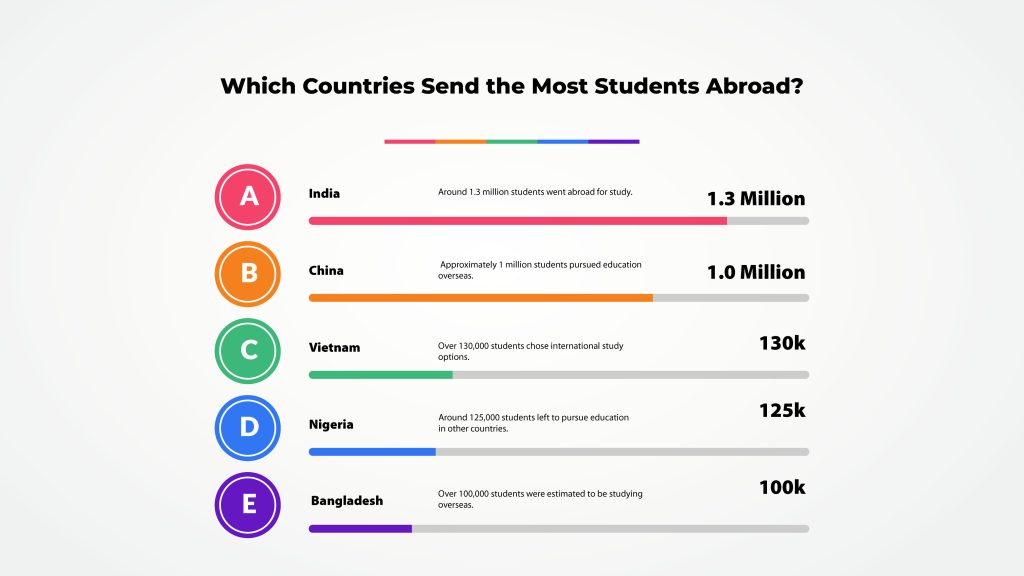
These figures show that South and Southeast Asia remain incredibly strong contributors to global student mobility. Study abroad trends 2026 highlight how this growth is driven by large youth populations, rising middle classes, and a high demand for internationally recognized degrees.
Why Do Students Choose to Study Abroad?
Study abroad trends 2026 reveal that several interconnected reasons motivate students around the world to cross borders for education:
1. Quality of Education and Global Recognition
Foreign universities, particularly in English‑speaking countries, offer robust academic systems, diverse research facilities, and industry‑aligned programs. Degrees from these institutions carry global recognition that boosts employability.
2. Career and Employment Prospects
Studying abroad often enhances job opportunities. Many host countries provide post‑study work rights, internships, and networking advantages that can lead to long‑term employment.
3. Language and Cultural Exposure
Students gain valuable language skills and cultural competencies by studying abroad — increasingly essential for roles in international business, research, and global sectors.
4. Living Standards and Personal Growth
Higher standards of living, exposure to multicultural environments, and structured student support systems are powerful pull factors.
5. Research and Innovation Opportunities
Students interested in research fields, innovation, and technology find better facilities and mentorship abroad, pushing them to pursue opportunities at global universities.
Bangladeshi Students Abroad: Study Abroad Trends 2026 and Key Challenges
For Bangladeshi students, the trend of international education continues to grow strongly. While UNESCO reported around 52,799 Bangladeshi students studying abroad in 2023, more recent estimates indicate over 100,000 students were abroad by 2025. (Meridean Overseas)
Over time, the expenditure on overseas education from Bangladesh has increased significantly. In FY25 alone, Bangladeshi students spent approximately $667.77 million on international education — a testament to the rapid rise in demand and the investment that families and students are making for global qualifications. (Dhaka Tribune)
This growth underscores a shift in mindset — students and families are willing to invest more for exposure, better career returns, and broader opportunities that international education promises.
However, this trend also brings challenges:
- Financial pressures due to high tuition and living costs abroad.
- Visa complexities in competitive markets.
- Adjustment issues related to culture, climate, and regulations.
Despite the challenges, Bangladeshi students continue to remain ambitious and adaptive, choosing study destinations based on affordability, work rights, post‑study opportunities, and quality of life. (LinkedIn)
Emerging Shifts in Global Education Destinations
The international education landscape is evolving in 2026. Study abroad trends 2026 show that while traditional destinations like the USA, UK, Canada, and Australia remain top choices, other countries are also gaining traction:
- Germany, France, and Spain are emerging as alternatives, offering cost‑effective options and strong academic credentials. (The Economic Times)
- Japan is beginning to attract more international students, particularly in technology and skill‑focused programs, as stricter visa policies in other countries push learners to diversify destinations. (The Times of India)
These changes reflect a broader shift — students are no longer focused solely on brand‑name institutions but are weighing options based on total value, including cost, work opportunities, and long‑term prospects.
The Future of International Education
As we progress through 2026 and beyond, the overall trend in global student mobility is expected to keep rising. By 2030, projections suggest the number of international students worldwide could exceed 10 million, driven by expanding economies, digital access, and shifting global workforce demands. (The Economic Times)
For countries like Bangladesh, study abroad trends 2026 highlight growing opportunities to better prepare students through targeted career counseling, flexible academic pathways, and partnership programs with global universities. These initiatives can help students access international education while also contributing to national growth and skill development.
Education Abroad: Balancing Opportunity with National Growth
While the upward trajectory of international education highlights opportunity, there’s an equally important conversation to be had about retaining talent and building stronger domestic education systems.
Sending students overseas can enrich a nation’s intellectual capital, but it also comes with the risk of brain drain if returning pathways and local opportunities are not strong enough.
Countries like Bangladesh are increasingly focusing on strengthening local higher education and creating collaborations with international institutions. Study abroad trends 2026 also highlight the importance of such partnerships, enabling students to access global education standards without completely severing ties with their home systems.
Conclusion: 2026 — A Year of Strategic Study Abroad Decisions
The landscape of international education in 2026 paints a picture of expanding global mobility, diversified options, and strategic student choices. Study abroad trends 2026 highlight rising outbound student numbers and the emergence of new host destinations, as students navigate opportunities that align with career goals, financial realities, and global aspirations.
Bangladeshi students, as part of this vibrant global movement, continue to pursue international education with determination. For families, institutions, and policymakers alike, understanding these trends is key to providing effective guidance and ensuring that study abroad becomes not just a destination choice — but a transformative journey.